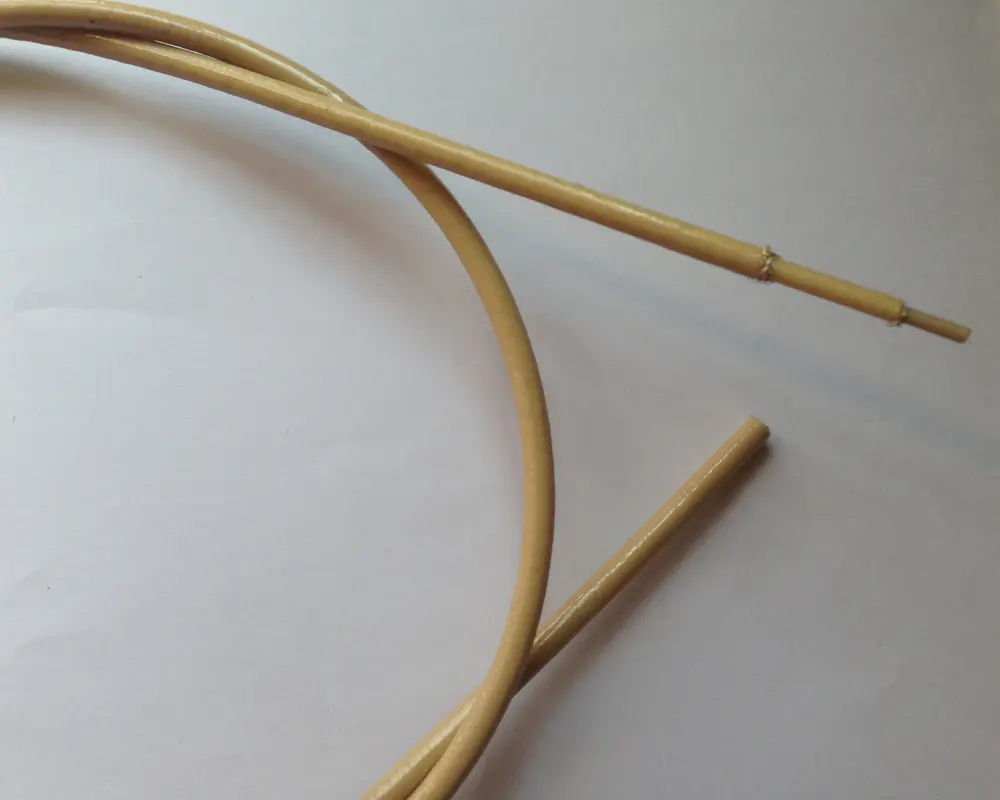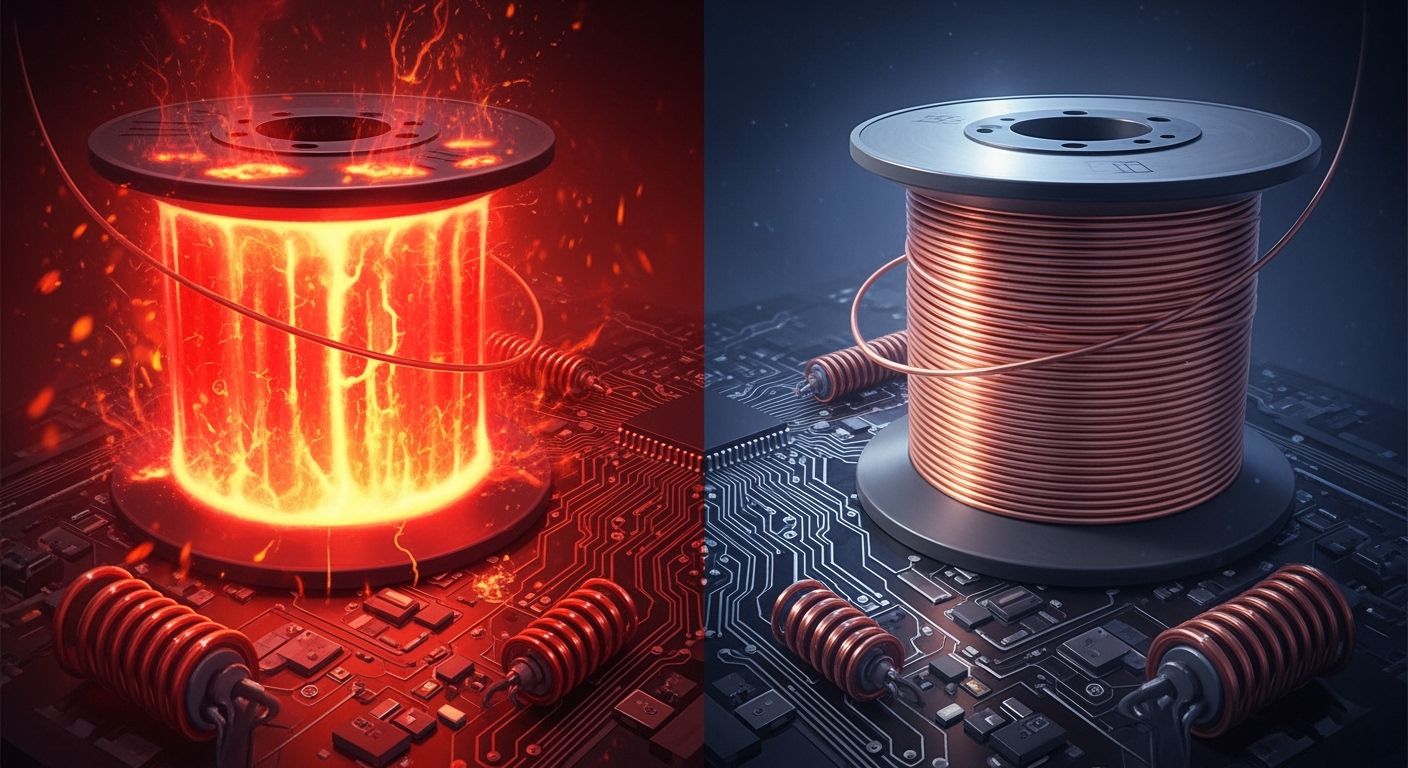
Il filo magnetico per altissime temperature (300 °C) utilizza un isolamento in film di poliimmide (PI) avanzato per mantenere un'integrità operativa continua fino a 300 °C. Al contrario, il filo magnetico standard utilizza rivestimenti in smalto organico come poliuretano o poliestere-immide. Questi rivestimenti in smalto convenzionali limitano la resistenza termica a classi termiche inferiori, comprese tra 130 °C e 200 °C.
Far funzionare i sistemi elettromagnetici a temperature superiori alla resistenza termica nominale del filo compromette seriamente l'affidabilità del sistema a lungo termine. Temperature di esercizio eccessive inducono un rapido infragilimento dell'isolamento negli avvolgimenti delle bobine. Di conseguenza, questa degradazione chimica innesca una grave rottura dielettrica e cortocircuiti distruttivi. È necessario specificare classi di isolamento appropriate per proteggere le bobine sottoposte a forti sollecitazioni dal degrado termico e da costosi guasti alle apparecchiature.
L'isolamento avanzato in pellicola di poliimmide consente al filo magnetico resistente alle temperature di 300 °C di sopportare calore estremo senza deteriorarsi.
Le verniciature a smalto standard si degradano rapidamente al di sopra dei 120 °C e causano pericolosi cortocircuiti elettrici.
L'isolamento in poliimmide previene la perdita di potenza e mantiene i motori ad alta tensione in funzione in modo efficiente anche in condizioni di stress estremo.
Scelta del filo magnetico a 300 °C Riduce i costi di riparazione a lungo termine e previene guasti catastrofici alle apparecchiature.
I progetti elettromagnetici ad alte prestazioni richiedono una chimica di isolamento precisa. È necessario selezionare un isolamento del filo in grado di resistere a condizioni termiche aggressive preservandone l'integrità fisica. Il filo magnetico standard utilizza rivestimenti in smalto liquido. I produttori applicano poliuretani liquidi o poliesterimmidi direttamente sul conduttore. Il processo di polimerizzazione del liquido crea sottili strati polimerici attorno al nucleo di rame. Tuttavia, questi smalti organici di base possiedono semplici catene molecolari. Lo stress termico rompe rapidamente questi deboli legami molecolari durante il funzionamento. filo magnetico ad alta temperatura si affida invece a una tecnologia cinematografica specializzata. Gli ingegneri costruiscono isolamento in poliimmide aromatica Attraverso una complessa polimerizzazione a crescita graduale, il poliimmide presenta anelli immidici ripetuti all'interno di robuste strutture di base di carbonio aromatico. Questa matrice aromatica rigida garantisce un'eccezionale stabilità termica e protegge la barriera fisica del film da aggressioni chimiche, umidità ambientale e forte abrasione meccanica.
Le verniciature a smalto standard sono adatte ai motori elettrici di uso quotidiano e ai trasformatori a basso stress. Tuttavia, gli smalti standard si deteriorano quando le sollecitazioni termiche superano i normali parametri operativi. L'isolamento in poliuretano standard si degrada rapidamente in condizioni di temperatura elevate. È possibile valutare le principali capacità termiche di questi materiali isolanti concorrenti in base ai parametri operativi chiave:
Materiale isolante | Limite di funzionamento termico continuo | Caratteristiche di degradazione e invecchiamento |
|---|---|---|
Poliuretano | 105°C – 120°C | Si fessura e invecchia rapidamente se esposto a temperature superiori a 80 °C per periodi prolungati; si degrada rapidamente a temperature elevate. |
Poliimmide | 200 °C – 260 °C | Preserva l'integrità strutturale senza segni di invecchiamento; presenta una resistenza superiore agli shock termici e possiede il più lento tasso di decadimento delle prestazioni nel lungo periodo. |
Gli smalti poliuretanici perdono elasticità meccanica con il calore. Le elevate temperature di esercizio causano la reticolazione prematura e il restringimento degli smalti applicati in forma liquida. Questo processo crea sottili microfratture superficiali lungo le spire della bobina. Al contrario, il filo magnetico 300°C utilizza un rivestimento in pellicola di poliimmide senza giunture. Le strutture ad anello aromatico resistono alla scissione della catena durante carichi elettrici elevati. Scegliendo la pellicola di poliimmide al posto degli smalti standard, si eliminano lo sfaldamento fisico della pellicola e i punti di assottigliamento dell'isolamento.
Il funzionamento delle apparecchiature vicino alle soglie termiche massime accelera tassi di degrado dell'isolamentoGli smalti poliuretanici tradizionali raggiungono rapidamente il loro limite strutturale. Il poliuretano si degrada rapidamente al di sopra della sua soglia di sicurezza per un utilizzo continuo. L'esposizione prolungata a temperature superiori a 80 °C induce un grave invecchiamento del materiale. La catena polimerica si rompe, causando la formazione di rivestimenti isolanti fragili. I composti organici volatili fuoriescono dallo smalto riscaldato, creando vuoti microscopici all'interno del pacco di spire. Questi vuoti interni indeboliscono le proprietà dielettriche. I vuoti microscopici innescano anche scariche ad arco localizzate tra le spire adiacenti.
Il poliimmide offre una capacità termica di prim'ordine tra gli isolanti per fili magnetici, mantenendo le sue prestazioni operative fino a 250 °C. L'avanzata tecnologia dei fili magnetici a 300 °C estende ulteriormente questa soglia termica. Il poliimmide resiste efficacemente alla degradazione termica, all'esposizione chimica e alle sollecitazioni meccaniche. La fitta rete chimica aromatica previene l'ossidazione del polimero. Mantiene lo spessore dell'isolamento fisico nonostante le costanti sollecitazioni termiche elevate. L'utilizzo di un isolamento in film di poliimmide previene i cortocircuiti prematuri delle bobine. Il materiale mantiene la flessibilità strutturale durante i cicli termici estremi. In questo modo si evitano guasti improvvisi alle apparecchiature elettriche, si riduce la frequenza di manutenzione e si prolunga la durata operativa del sistema in ambienti industriali esigenti.
I sistemi elettrici ad alte prestazioni richiedono una robusta resistenza termica e un'incrollabile capacità di isolamento elettrico in condizioni di temperature ambiente estreme. Filo magnetico ad altissima temperatura Preserva l'integrità dell'isolamento strutturale e mantiene caratteristiche elettriche di alto livello anche in presenza di stress termico prolungato. Proteggete le bobine critiche da guasti dielettrici catastrofici scegliendo un isolamento in film di poliimmide avanzato.
Uno strato di film di poliimmide offre un'eccezionale rigidità dielettrica, compresa tra 100 e 300 kV/mm, anche in condizioni di elevata temperatura. Gli isolanti in smalto standard si assottigliano, si ammorbidiscono e si degradano sotto carichi termici severi. L'isolamento in poliimmide mantiene una struttura molecolare rigida. Questo polimero strutturale denso previene la formazione di archi di tensione localizzati tra le spire adiacenti del filo durante il funzionamento continuo ad alto stress.
È possibile valutare il confronto delle prestazioni elettriche tra la pellicola di poliimmide e le tradizionali opzioni di smalto in diverse classi termiche:
Classe termica del filo | Tangente di perdita dielettrica (tanδ) a 200 °C | Tensione di innesco della scarica parziale a temperatura ambiente (PDIV) | Tensione di innesco della scarica parziale ad alta temperatura (PDIV) |
|---|---|---|---|
Classe B (Smalto standard) | 0,080 | 800 V | 400 V |
Classe F (Smalto standard) | 0,040 | 900 V | 550 V |
Classe H (Smalto standard) | 0,020 | 1000 V | 750 V |
Classe N (Smalto standard) | 0,015 | 1100 V | 900 V |
Classe R (Smalto standard) | 0,012 | 1200 V | 1050 V |
Classe C (poliimmide PI) | 0,008 | 1300 V | 1200 V |
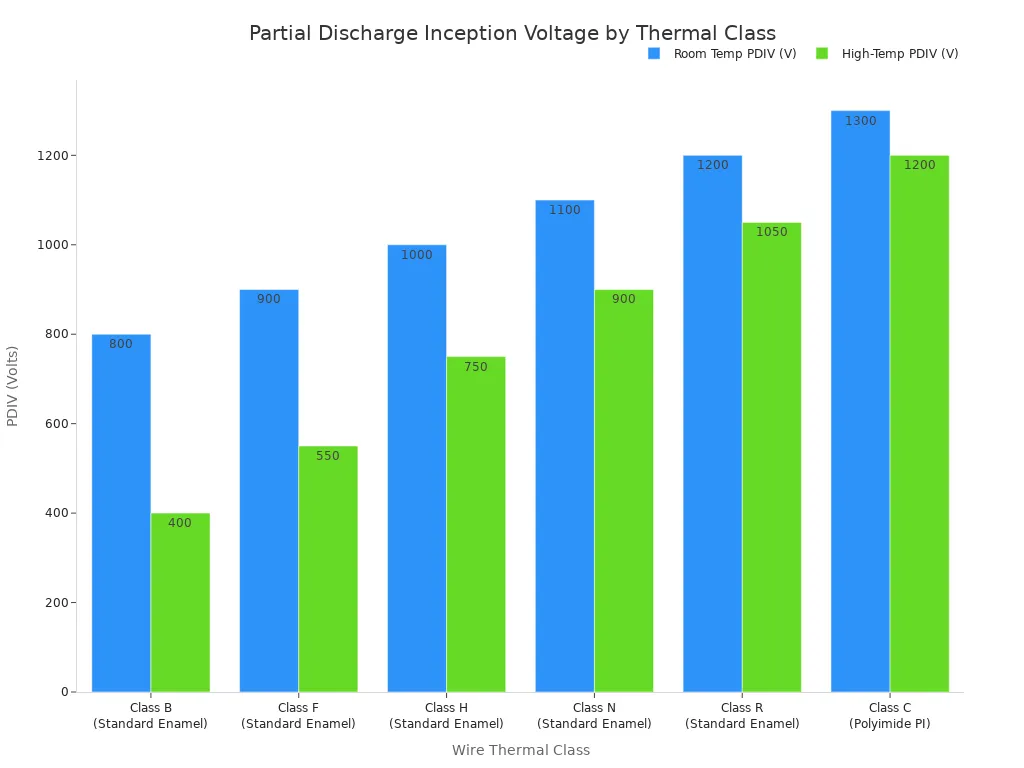
L'isolamento in poliimmide di classe C dimostra una stabilità di base elettrica superiore. Lo smalto standard di classe B subisce un brusco calo delle prestazioni a temperature elevate. La sua tensione di innesco delle scariche parziali scende da 800 V a 400 V. L'isolamento in poliimmide di classe C subisce solo un calo minimo da 1300 V a 1200 V. Elevate soglie di scarica parziale raggiungono prevenzione delle scariche dielettriche negli avvolgimenti elettromagnetici ad alta tensione.
La pellicola di poliimmide mantiene un'elevata resistività volumetrica anche in caso di esposizione termica continua e intensa. L'elevata resistività volumetrica impedisce alle correnti di dispersione di fuoriuscire attraverso lo strato isolante. Le correnti di dispersione indesiderate creano un eccessivo accumulo di calore all'interno degli statori del motore, caratterizzati da elevata densità di materiale. Il controllo delle correnti di dispersione interne riduce le perdite di energia resistiva complessive negli avvolgimenti ad alta densità.
Densità di perdita di potenza = densità di corrente di dispersione x gradiente del campo elettricoUn basso valore della tangente di perdita dielettrica migliora direttamente l'efficienza operativa del sistema. Il poliimmide di classe C limita le perdite di potenza a tanδ = 0,008 a 200 °C. Lo smalto standard di classe B consente alle perdite dielettriche di raggiungere picchi fino a 0,080 alla stessa temperatura. Il poliimmide di classe C mantiene le perdite di potenza dielettrica costantemente al di sotto di 0,01 anche in presenza di elevate sollecitazioni termiche.
Filo magnetico a 300 °C Mantiene un'elevata efficienza energetica per lunghi cicli operativi. Le minori perdite di isolamento limitano il riscaldamento interno all'interno di assemblaggi elettromagnetici compatti. Si evitano condizioni di instabilità termica prevenendo la degradazione dielettrica localizzata. L'utilizzo di filo magnetico premium da 300 °C garantisce soglie di rottura di tensione stabili, riduce al minimo le perdite di potenza attiva e prolunga la durata operativa complessiva delle apparecchiature in ambienti operativi difficili.
Gli ambienti operativi severi richiedono soluzioni di cablaggio specializzate. Sistemi di propulsione aerospaziale ad alto stress, motori per l'esplorazione petrolifera in profondità e motori per giunti di robotica industriale sono continuamente soggetti bobine elettromagnetiche ad alta sollecitazione a calore ambientale intenso. I fili smaltati standard si degradano rapidamente sotto queste continue sollecitazioni termiche. Avanzato isolamento dei cavi per temperature estreme Consente alle vostre apparecchiature critiche di funzionare in modo affidabile senza subire il deterioramento della pellicola strutturale o cortocircuiti.
È possibile utilizzare il filo magnetico a 300 °C in applicazioni industriali gravose per eliminare i guasti dielettrici prematuri. CITCable offre soluzioni di filo magnetico a 300 °C ad alte prestazioni, progettate specificamente per sistemi elettrici aerospaziali critici, attuatori militari e attrezzature di perforazione. Il loro speciale isolamento in poliimmide resiste all'esposizione a sostanze chimiche aggressive, vibrazioni fisiche e picchi termici estremi durante cicli di lavoro continui e impegnativi.
Il filo smaltato standard alimenta efficacemente i beni di consumo quotidiani e i macchinari commerciali. Il filo in poliuretano con classificazione di classe 130 °C (B) offre la saldabilità diretta per bobine di segnale a bassa potenza, prototipi avvolti a mano, utensili elettrici e motori di elettrodomestici in frullatori e ventilatori. Il filo in poliestere-immide raggiunge la resistenza termica di classe 180 °C (H), supportando avvolgimenti di motori industriali, driver audio di alta qualità e convertitori ausiliari per veicoli elettrici.
Le classi termiche superiori sono adatte ai motori commerciali più esigenti. È possibile valutare le opzioni standard di filo magnetico smaltato in queste categorie termiche consolidate:
Classe di filo | Limite di temperatura continuo | Esempi tipici di applicazione |
|---|---|---|
Classe H (Classe 180) | 180 °C | Servomotori, unità VFD, sistemi di trazione per veicoli elettrici, compressori di raffreddamento e motori per treni ad alta velocità |
Classe 200 | 200 °C | Motori per apparecchiature industriali ad alta temperatura, sistemi elettrici aerospaziali, motori per l'esplorazione di pozzi petroliferi/di gas e motori per giunti di robotica industriale. |
È inoltre possibile specificare il filo di rame smaltato di classe 180 per trasformatori di alimentazione switching con potenza superiore a 100 W, motori BLDC ad alta efficienza per e-bike e droni, trasformatori per amplificatori di classe D e induttori per servomotori industriali operanti ad alte temperature ambiente superiori a 70 °C. I rivestimenti in smalto standard soddisfano i requisiti termici moderati per le applicazioni elettriche convenzionali.
La scelta dell'isolamento dei cavi richiede un bilanciamento tra i costi di acquisto iniziali e i rischi operativi significativi. La protezione dei componenti critici avviene valutando le sollecitazioni meccaniche, le esigenze elettriche e i limiti termici già in fase di progettazione iniziale del sistema.
Nella scelta dell'isolamento per sistemi sottoposti a forti sollecitazioni, è necessario valutare i principali criteri di rischio ingegneristico. Vibrazioni meccaniche intense, cicli termici continui ed elevate forze di rotazione causano sfaldamento dell'isolamento e guasti dielettrici.
Criterio di rischio ingegneristico | Fattore di stress | Strategia di valutazione e mitigazione del rischio |
|---|---|---|
Flessibilità e adesione | Cicli termici e sollecitazioni di flessione meccanica | Avvolgere il filo 5 volte attorno a un mandrino di diametro corrispondente per verificare l'assenza di sfaldamenti e l'integrità dell'isolamento tra le spire. |
Classificazione termica | Rottura prematura dell'isolamento sotto carichi elettrici elevati | Verificare la resistenza continua alla temperatura entro l'intervallo richiesto da 105 °C a 240 °C+. |
Fori di isolamento e densità dei difetti | Microfori causati da polvere di rame o bave di stampaggio che provocano cortocircuiti elettrici | Valutare l'adesione meccanica del film sotto stress rotazionale, impostare limiti massimi di guasto e richiedere registri dei guasti in linea. |
I costruttori di sistemi impediscono guasto catastrofico della bobina In applicazioni motoristiche critiche per la missione mediante l'applicazione di rigidi protocolli di collaudo. I registri di rilevamento in linea individuano i microfori prima dell'installazione del motore. Strati di pellicola di alta qualità preservano l'isolamento e resistono alle dannose bave di rame.
Il filo smaltato standard offre costi di acquisto inferiori. Tuttavia, l'utilizzo di rivestimenti convenzionali in prossimità dei limiti termici massimi comporta frequenti fermi macchina e danni all'hardware. L'impiego di filo magnetico resistente a 300 °C aumenta i costi iniziali dei materiali, ma l'elevato margine termico previene guasti prematuri dell'isolamento. In questo modo si riducono i costi totali di proprietà per l'intero ciclo di vita operativo.
La tolleranza termica superiore semplifica i requisiti di raffreddamento attivo all'interno di alloggiamenti motore compatti. I sistemi che utilizzano filo magnetico a 300 °C tollerano temperature ambiente elevate senza bisogno di pesanti circuiti di raffreddamento a liquido o scambiatori di calore esterni. L'eliminazione dell'hardware di raffreddamento ausiliario riduce il peso del sistema, diminuisce la complessità di produzione e massimizza l'efficienza energetica. Inoltre, l'isolamento stabile in poliimmide estende durata operativa a lungo termine, garantendo prestazioni affidabili attraverso cicli di lavoro continui e intensi.
I fili magnetici standard utilizzano smalti organici come il poliuretano. Questi smalti convenzionali si degradano rapidamente sotto carichi termici estremi. Le pellicole di poliimmide di ultima generazione utilizzano robuste strutture ad anello aromatico. Questa solida struttura chimica consente al filo per alte temperature di preservare la flessibilità meccanica e di mantenere un'elevata rigidità dielettrica tra 100 e 300 kV/mm sotto stress termico continuo.
Specificare un filo magnetico avanzato resistente a 300 °C protegge le bobine elettromagnetiche critiche in ambienti operativi difficili. Questo isolamento ad alte prestazioni previene cortocircuiti prematuri, fragilità del film e guasti dielettrici distruttivi. È necessario valutare i costi iniziali più elevati dei materiali rispetto ai rischi di fermi macchina catastrofici. Scegliere un'elevata resistenza termica garantisce l'affidabilità del sistema a lungo termine e riduce i costi operativi complessivi delle apparecchiature.
Si ottiene un funzionamento continuo ad alta temperatura selezionando filo smaltato in poliimmideIl filo magnetico standard si basa su rivestimenti in smalto organico come poliuretano o poliestere-immide. Questi rivestimenti in smalto standard limitano la resistenza termica continua a temperature comprese tra 130 °C e 200 °C.
Filo standard operativo sopra il suo classe termica del filo magnetico provoca un rapido fragilismo dell'isolamento. Lo stress termico rompe i legami chimici organici all'interno dei rivestimenti standard. Questa rottura del materiale crea vuoti microscopici, innescando rottura dielettrica negli avvolgimenti del motore e causando cortocircuiti distruttivi.
La pellicola in poliimmide preserva l'efficienza del sistema elettrico, mantenendo un'elevata rigidità dielettrica tra 100 e 300 kV/mm anche in condizioni di calore estremo. La sua struttura molecolare rigida blocca la densità di dispersione della corrente, riducendo al minimo la perdita di potenza dielettrica attiva durante carichi elettrici continui e intensi.
Sì. Si previene il guasto catastrofico delle apparecchiature nelle applicazioni critiche specificando componenti di alta qualità. isolamento per bobine ad alta temperaturaL'elevato margine termico elimina la necessità di hardware di raffreddamento ausiliario, riduce al minimo i rischi di fermo operativo e prolunga la durata complessiva delle apparecchiature in ambienti industriali difficili.
3F, C Build, NO.10, MinChang Road, Nance, HuMen DongGuan City,GuangDong.China.


 Rete IPv6 supportata